
Blog

2026 Honda Civic vs Hyundai Elantra: Interior, Power & Value Compared

2026-Honda-Civic-vs-Hyundai-Elantra-Interior-Power-Value-Compared

Why the 2026 Elantra Beats the Honda Civic for Smart Buyers

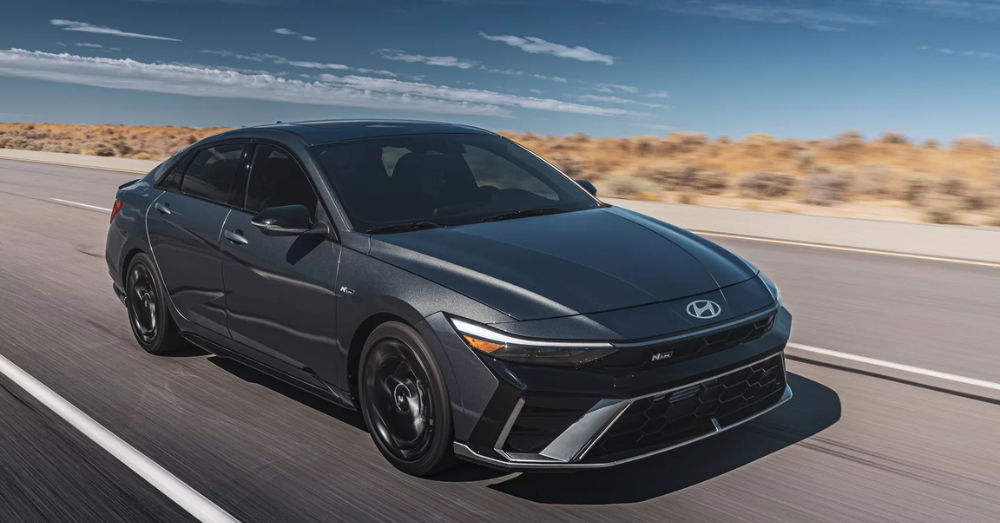
Cross-shopping the 2026 Honda Civic vs Hyundai Elantra? You've narrowed it down to two solid compact sedans. Here's what separates them: Hyundai delivers better real-world value through lower pricing, superior fuel economy, a 10-year warranty that puts Honda's coverage to shame, and a dual-clutch transmission that feels more connected than the Civic's droning CVT. Let's break down why the Elantra makes more sense for drivers who want the most car for their money.

  • The Elantra Hybrid Blue crushes the Civic on highway efficiency with 58 mpg versus the Civic's 47 mpg, saving you real money on long commutes.
  • Starting at $22,625, the Elantra undercuts the Civic by nearly $2,000 while packing more standard features at every trim level.
  • Hyundai's 10-year/100,000-mile powertrain warranty runs circles around Honda's 5-year/60,000-mile coverage, protecting your investment twice as long.

Where the Elantra Outperforms on Efficiency

Hyundai's base 2.0-liter engine (147 hp) matches the Civic's output while delivering better fuel economy: 35 city and 43 highway versus the Civic's 32/41. You're already ahead before considering a hybrid.

Step up to the Elantra Hybrid, and you get a 1.6-liter engine paired with an electric motor for 139 hp and 195 lb-ft of torque. That torque makes city driving feel punchy. But here's the real winner: the six-speed dual-clutch transmission. Unlike the Civic's CVT, which drones and feels disconnected, Hyundai's DCT shifts through gears like a traditional automatic. No rubber-band feel on highway on-ramps.

Blue trim hybrids deliver 51 city and 58 highway mpg. That 58 highway number crushes the Civic Hybrid's 47 mpg. Rack up 15,000 highway miles annually, and you're saving hundreds at the pump. Sure, the Civic makes 200 total system horsepower and hits 0-60 faster (6.1 seconds versus 8.4). But how often are you launching from stoplights? Real-world efficiency and a smoother transmission matter more in traffic and at highway speeds.

Better Interior Value in the Elantra

Both sedans seat five comfortably with comparable dimensions and trunk space (14.2 cu ft in the Elantra versus 14.8 in the Civic). What's different? Hyundai gives you more for less money.

Even the base SE includes an 8-inch touchscreen with wireless Apple CarPlay and Android Auto. Move up to the SEL Sport at $23,750, and you add heated seats, dual-zone climate, and wireless charging. Honda charges more upfront, then makes you climb trim levels to match these features.

Look at the Limited's dual 10.3-inch displays. They stretch across the dash like a luxury sedan's cockpit. Yes, some trim materials aren't as premium as the Civic's. But you're getting more tech, more features, and more screen real estate for thousands less. When choosing between slightly nicer plastics or keeping money in your pocket, Hyundai makes the smarter call.
2026-Honda-Civic-vs-Hyundai-Elantra-Interior-Power-Value-Compared-Elantra

Safety Tech Where It Counts

Honda includes Honda Sensing with adaptive cruise, lane keeping, and automatic braking. Hyundai counters with SmartSense, including blind-spot monitors, driver attention warning, and rear cross-traffic alert, standard across all trims. That's more safety features from the base model up.

Higher trims add front cross-traffic alert, bicyclist detection, and phone-as-key functionality. You also get dual 10.3-inch screens on the Limited, giving you more display space than the Civic's 9-inch setup. Both cars handle safety and connectivity well. Hyundai just includes more without charging premium prices.

Quick Reference Comparison

Category2026 Honda Civic2026 Hyundai Elantra
Base Engine2.0L 4-cyl, 150 hp2.0L 4-cyl, 147 hp
Hybrid Power200 hp total system139 hp, 195 lb-ft torque
Base MPG (city/hwy)32/4135/43
Hybrid MPG (city/hwy)50/4751/58 (Blue trim)
Starting Price$24,595$22,625
Cargo Space14.8 cu ft14.2 cu ft
TransmissionCVT (hybrid uses eCVT)CVT (hybrid uses 6-speed DCT)
Standard Screen7-inch (9-inch on hybrid)8-inch standard

Why the Elantra Wins on Total Value

Sticker prices tell the story: $22,625 for the Elantra versus $24,595 for the Civic. That's nearly $2,000 in savings before negotiating. As you move up the trim levels, the gap widens. Hyundai's SEL Sport at $23,750 includes heated seats, dual-zone climate, and wireless charging that cost thousands more in a comparable Civic.

Warranty coverage makes an even bigger difference. Hyundai gives you 5-year/60,000-mile basic coverage and 10-year/100,000-mile powertrain protection. Honda offers 3-year/36,000-mile basic and 5-year/60,000-mile powertrain. Keep your car past 60,000 miles, and the Elantra saves you from repair bills Honda owners pay out of pocket.

Honda has slightly better resale value. But do the math: save $2,000 upfront, get better highway fuel economy, and benefit from warranty coverage that lasts twice as long. That resale gap shrinks fast for buyers who keep cars 7-10 years.

The Smart Money Picks the Elantra

For most buyers, the 2026 Hyundai Elantra wins this matchup. Lower upfront costs, better highway fuel economy, an engaging dual-clutch transmission, more standard features, and warranty protection that lasts twice as long all add up to better value.

Honda makes sense if you prioritize the sportiest handling and don't mind paying more. But for daily commuters, budget-conscious buyers, highway drivers, or anyone keeping their car long enough to benefit from that 10-year warranty, Hyundai is the smarter choice. Money saved adds up to thousands over the car's life.

Experience the Elantra Advantage at Gates Hyundai

Ready to see why the Elantra outperforms the competition? We keep a complete 2026 lineup at our Richmond showroom, from the budget-friendly SE to the loaded Limited hybrid. Take the dual-clutch transmission for a test drive and feel the difference compared to a droning CVT. Our team can show you exactly how much you'll save on fuel with the hybrid's 58 highway mpg, walk you through Hyundai's 10-year warranty coverage, and help you configure the trim that gives you what you want without paying for extras you don't need. Stop by and discover why smart buyers are choosing the Elantra.

Recommended Posts

How-Much-Can-the-2027-Hyundai-Santa-Fe-Tow-Towing-Capacity-by-Trim

How Much Can the 2027 Hyundai Santa Fe Tow? Towing Capacity by Trim

Sizing Up Trailers for Every 2027 Santa Fe Trim Got a boat, a camper, or a utility trailer sitting in the driveway? The 2027 Hyundai Santa Fe can handle a fair amount of weight for a three-row SUV, but the exact number shifts depending on the trim and powertrain you choose. We pulled every figure in this guide from Hyundai's official 2027 spec and pricing sheets, so you'll know what each version can pull before you hook up. Gas SE, SEL, Limited, and Calligraphy trims are rated to tow 3,500 pounds with trailer brakes. The AWD-only XRT tops the lineup at 4,500 pounds with trailer brakes. Every hybrid trim is rated for 2,000 pounds, and every 2027 Santa Fe can pull 1,650 pounds without trailer brakes. What the Gas Trims Can Pull Four of the five gas trims share the same rating. The SE, SEL, Limited, and Calligraphy each use a 277-horsepower, 2.5L turbocharged four-cylinder engine producing 311 lb-ft of torque, paired with an 8-speed automatic. With a braked trailer, Hyundai rates them at 3,500 pounds. Its spec sheet lists one number for the 2.5L turbo, with no split between front-wheel drive and HTRAC all-wheel drive. So you can pick the drivetrain that suits Kentucky winters and keep the same rating. Lighter utility trailers and small campers can often fit under that limit. Before you hook up, check the loaded weight on your trailer's sticker or paperwork, since gear, water, and fuel add pounds fast. The XRT Steps Up to 4,500 Pounds Need more muscle? Hyundai bumps the XRT's rating to 4,500 pounds with trailer brakes, a full 1,000 pounds more than the other gas models. It uses the same 277-hp turbo engine. HTRAC all-wheel drive comes standard, along with 18-inch dark alloy wheels on Continental all-terrain tires. Ground clearance grows to 8.3 inches, up from 7.0 inches on the other trims. You also get a Sand/Mud terrain mode and a 115-volt power outlet for the campsite. Fuel economy is the tradeoff. The XRT has an EPA rating of 21 mpg combined, while the other gas trims with AWD have an EPA rating of 23 mpg combined. Hybrid Trims Top Out at 2,000 Pounds The Santa Fe Hybrid gives up some pulling power in exchange for much better fuel economy. All four hybrid trims pair a 1.6L turbocharged four-cylinder with an electric motor. Together they make 231 horsepower, and a 6-speed automatic sends it to the wheels. Hyundai rates every hybrid trim at 2,000 pounds with trailer brakes. In return, you get up to 36 mpg combined with FWD and 35 mpg combined with AWD. If you haul a small trailer a few times a year and spend most of your miles commuting, the hybrid makes a lot of sense. 2027 Hyundai Santa Fe Towing Capacity by Trim Trim Powertrain Drivetrain Towing With Trailer Brakes Towing Without Trailer Brakes EPA Combined MPG (FWD / AWD) Starting MSRP* SE 277-hp 2.5L Turbo, 8-Speed Auto FWD or HTRAC AWD 3,500 lbs 1,650 lbs 24 / 23 $35,300 SEL 277-hp 2.5L Turbo, 8-Speed Auto FWD or HTRAC AWD 3,500 lbs 1,650 lbs 24 / 23 $37,840 XRT 277-hp 2.5L Turbo, 8-Speed Auto HTRAC AWD only 4,500 lbs 1,650 lbs AWD only: 21 $42,290 Limited 277-hp 2.5L Turbo, 8-Speed Auto FWD or HTRAC AWD 3,500 lbs 1,650 lbs 24 / 23 $44,850 Calligraphy 277-hp 2.5L Turbo, 8-Speed Auto FWD or HTRAC AWD 3,500 lbs 1,650 lbs 24 / 23 $47,850 SE Hybrid 231-hp 1.6L Turbo Hybrid, 6-Speed Auto FWD or HTRAC AWD 2,000 lbs 1,650 lbs 36 / 35 $36,650 SEL Hybrid 231-hp 1.6L Turbo Hybrid, 6-Speed Auto FWD or HTRAC AWD 2,000 lbs 1,650 lbs 36 / 35 $38,940 Limited Hybrid 231-hp 1.6L Turbo Hybrid, 6-Speed Auto FWD or HTRAC AWD 2,000 lbs 1,650 lbs 36 / 35 $45,950 Calligraphy Hybrid 231-hp 1.6L Turbo Hybrid, 6-Speed Auto FWD or HTRAC AWD 2,000 lbs 1,650 lbs 36 / 35 $48,950 *Starting MSRP shown for FWD versions, except the AWD-only XRT, and excludes freight charges, tax, title, and license fees. Specs from Hyundai Motor America's 2027 Santa Fe Features and Specifications sheet and hyundaiusa.com. Why Trailer Brakes Matter Every 2027 Santa Fe, gas or hybrid, is rated to pull 1,650 pounds without trailer brakes. That's the one part of the Hyundai Santa Fe towing capacity picture that stays the same across the whole lineup. To use the higher ratings in the chart, your trailer needs its own brakes. Passengers and cargo inside the SUV count against its weight limits too, so a full third row and a heavy trailer add up quickly. Towing Help That Comes Standard Hyundai includes Trailer Sway Control and a trailer pre-wire connection on every trim, according to its official spec sheet. Hillstart Assist Control helps keep you from rolling back on a slope. Driver-selectable Downhill Brake Control helps manage speed on steep grades. Paddle shifters come standard as well, so you can hold a lower gear on long downhill stretches. A hitch receiver doesn't appear on Hyundai's standard equipment list, so plan on adding one before your first trip. Picking the Right Santa Fe for Your Trailer Start with the heaviest thing you plan to tow, then leave yourself some breathing room. If your boat or camper weighs close to 4,000 pounds loaded, the XRT is the only Santa Fe built for that job. For trailers under 3,500 pounds, any gas trim works, so your budget and wish list can decide between the SE, with a $35,300 starting MSRP, and the Calligraphy, at $47,850. And if you tow light and drive a lot, the hybrid's mileage is the best in the lineup. Why Buy Your 2027 Santa Fe at Gates Hyundai Choosing a tow rating gets easier when you can see the trims side by side at Gates Hyundai in Richmond. We'll walk you through the gas, XRT, and hybrid models we have available and help you match one to the trailer you already own. Our parts department carries genuine Hyundai parts and accessories, and our certified technicians know the Santa Fe inside and out. We're part of the family-owned Gates Auto Family, with roots back to 1915. We keep the buying process relaxed and pressure-free. Our finance team works with a wide range of lenders, and our online Value Your Trade tool gives you an estimate for your current vehicle before you stop by. Frequently Asked Questions How much can the 2027 Hyundai Santa Fe tow? The 2027 Santa Fe XRT can tow up to 4,500 pounds with trailer brakes. Gas SE, SEL, Limited, and Calligraphy trims are rated for 3,500 pounds, and every hybrid trim is rated for 2,000 pounds with trailer brakes. Can the Santa Fe Hybrid tow as much as the gas model? No. Every 2027 Santa Fe Hybrid trim is rated to tow 2,000 pounds with trailer brakes. The gas trims are rated for 3,500 pounds, and the XRT is rated for 4,500 pounds. What can the 2027 Santa Fe tow without trailer brakes? Every 2027 Santa Fe, gas or hybrid, is rated to tow 1,650 pounds without trailer brakes. You need a trailer with its own brakes to reach the higher ratings. Does the 2027 Santa Fe need all-wheel drive to tow the most? The 4,500-pound XRT comes only with HTRAC all-wheel drive. Hyundai's spec sheet lists the same 3,500-pound rating for the other gas trims without splitting it by drivetrain. What towing features come standard on the 2027 Santa Fe? Hyundai lists Trailer Sway Control and a trailer pre-wire connection as standard on every 2027 Santa Fe trim. Hillstart Assist Control and Downhill Brake Control are standard as well. Bring Your Trailer's Weight and We'll Match the Trim Check the loaded weight on your trailer's paperwork, and our team will show you which Santa Fe handles it with room to spare. Shop the Santa Fe Shop the Santa Fe Hybrid

Does-the-Hyundai-Warranty-Transfer-to-a-Second-Owner

Does the Hyundai Warranty Transfer to a Second Owner?

What Warranty Coverage Rides Along With a Used Hyundai Shopping for a used Hyundai? You may wonder what happens to the factory warranty. Good news. Much of it stays with the car. A few pieces shrink. Certified used Hyundais can bring back more. Second owners get 5 years or 60,000 miles of powertrain coverage, while the original owner gets 10 years or 100,000 miles. Hybrid and electric battery coverage lasts 10 years or 100,000 miles for first and second owners. Certified used Hyundais get 10 years or 100,000 miles of powertrain coverage, counted from the car's first day of service. How Coverage Follows the Car Hyundai's warranty clock starts on day one. It counts from the day the first buyer took the car home, or the date of first use. The clock keeps ticking after the car changes hands. Say your Hyundai is three years old. It has about two years left on its new-vehicle coverage, as long as it's under 60,000 miles. The Hyundai warranty for the second owner starts with the new vehicle warranty, which lasts 5 years or 60,000 miles. It covers parts that Hyundai built or installed, and that fail due to defects in materials or factory workmanship. Normal use and upkeep still apply. A few items have shorter terms. Paint and the 12-volt battery run 3 years or 36,000 miles. Second owners are covered. So are third and later owners. Where the Powertrain Warranty Lands The powertrain warranty gets the most attention, with 10 years or 100,000 miles of coverage. It belongs to the first owner. After a sale, powertrain coverage drops to 5 years or 60,000 miles. That still protects selected engine and transmission parts that fail due to a factory defect. Hyundai may keep the 10-year coverage in place when an owner passes the car to a spouse. It excludes commercial use, like taxis and rentals. Pair that coverage with a vehicle history report and a technician's look-before-you-buy. Hyundai Warranty Coverage for First and Second Owners Coverage Original Owner Second Owner Powertrain Limited Warranty 10 years/100,000 miles 5 years/60,000 miles under the New Vehicle Limited Warranty New Vehicle Limited Warranty 5 years/60,000 miles Applies to second and later owners for the time and miles remaining Hybrid and EV battery, hybrid starter/generator, hybrid power control unit, and automatic transmission including traction motor 10 years/100,000 miles 10 years/100,000 miles Certified used powertrain warranty Not applicable 10 years/100,000 miles from the original in-service date, with a $50 deductible per repair visit Certified used 5-year/60,000-mile coverage Not applicable Remainder of the original term, which may not apply due to model year or mileage Certified used roadside assistance Not applicable 10 years/unlimited miles from the original in-service date Hyundai Select Used powertrain warranty Not applicable 90 days/5,000 miles from the retail sale date, with a $50 deductible per repair visit Certified used eligibility Not applicable 6 model years old and newer with 80,000 miles or less, plus a 173-point inspection Coverage terms come from Hyundai Motor America at hyundaiusa.com, including its current Owner's Handbook and Warranty Information. Terms for older model years can differ, and certified used coverage varies by model year and mileage, so see a participating Hyundai dealer for program details and limitations. Hybrid and Electric Batteries Keep Their Full Term Batteries are a different story. Used hybrid and EV buyers come out ahead. Hyundai covers the battery in its hybrids, plug-in hybrids, and EVs. Coverage lasts 10 years or 100,000 miles. That goes for the first owner and for later owners. Other hybrid parts get the same term. That covers the starter/generator, the power control unit, and the traction motor. Keep that in mind if you're eyeing a used Elantra Hybrid, Tucson Hybrid, Santa Fe Hybrid, or IONIQ 5. What a Certified Used Hyundai Adds Certified used Hyundais are six model years old or newer. They have 80,000 miles or fewer. Each one passes a 173-point inspection. Electric and hybrid models may have a different number of points. The powertrain warranty runs 10 years or 100,000 miles from the original in-service date. You pay a $50 deductible per repair visit. Roadside help runs for 10 years with unlimited miles. You also get the remainder of the original new-vehicle warranty, if it still applies. Older or higher-mileage cars may fall under Hyundai Select Used instead. Its powertrain warranty is shorter at 90 days or 5,000 miles. Questions to Ask Before You Sign Each used Hyundai has its own warranty story. A few questions help. Ask when the car was first sold or put into use, and check the current mileage. Those two numbers show how much time and mileage are left. Check the title too. Hyundai excludes any car that has ever had a salvage, rebuilt, or similar title. Ask if the car is certified used, since that changes the powertrain term. Check Hyundai's Warranty Handbook for the model year. Hyundai posts it online. Finally, keep your maintenance records in one folder in case you need a repair. Why Buy a Used Hyundai at Gates Hyundai Warranty math gets easier when someone walks through it with you. At Gates Hyundai, we're part of the Gates Auto Family, a family business now in its fourth generation. We'd rather answer your questions than rush you toward a signature. Our used lot has certified pre-owned Hyundai models and other trusted brands. You'll also find CARFAX 1-Owner vehicles. Our team can explain how much factory coverage a car has left and what a certified used Hyundai adds. The technicians on our team are factory-trained. They use genuine Hyundai parts for recall and warranty work. We service Hyundais even if you bought yours elsewhere. Look through our used inventory online, get pre-approved, or value your trade before you visit. Then stop by and ask us anything. Frequently Asked Questions Does the Hyundai warranty transfer to a second owner? Yes, in part. The 5-year/60,000-mile New Vehicle Limited Warranty covers second and subsequent owners for the remaining time and miles. The 10-year/100,000-mile powertrain warranty is for the original owner only, with a narrow exception for eligible spouses. Second owners get powertrain coverage under the 5-year/60,000-mile warranty. Can a second owner get the 10-year/100,000-mile powertrain warranty? Yes, on a certified used Hyundai. That powertrain warranty runs 10 years or 100,000 miles from the original in-service date. A $50 deductible applies per repair visit. Does the hybrid or EV battery warranty carry over to a second owner? Yes. Hyundai lists 10 years/100,000 miles for the hybrid or electric battery for both the original and the subsequent owner. The hybrid starter/generator, power control unit, and automatic transmission, including the traction motor, carry the same term. What does a certified used Hyundai add for a second owner? It adds a 10-year/100,000-mile powertrain warranty from the original in-service date. It also adds 10 years of roadside assistance with unlimited miles. You get what's left of the original 5-year/60,000-mile warranty where it still applies. These cars are six model years old or newer, have 80,000 miles or less, and pass a 173-point inspection. How do I find out how much of a Hyundai warranty is left on a used car? Start with the date the car was first sold or put into use, plus the current mileage. Hyundai also lets owners check which warranties apply to a vehicle through MyHyundai. A Hyundai dealer can walk you through the terms, too. Ask Us How Much Coverage Is Left Bring the VIN or pick out a car on our lot, and we'll show you exactly which factory coverage still applies. Shop Certified Used Value Your Trade

2026-Hyundai-Tucson-vs-Toyota-RAV4-Why-Tucson-Is-the-Smarter-Compact-SUV-Buy

2026 Hyundai Tucson vs. Toyota RAV4: Why Tucson Is the Smarter Compact SUV Buy

Why the 2026 Tucson Stretches Your Dollar Further Than the RAV4 Park at any Kentucky grocery store and you'll count a dozen compact SUVs before you reach the door. Two names pop up again and again. This year's Toyota RAV4 is all-new and now comes only as a hybrid or plug-in hybrid, while the 2026 Hyundai Tucson lets you choose gas, hybrid, or plug-in power. Both are good SUVs, but the Tucson keeps more money in your pocket at almost every step of the trim ladder. The gas Tucson SE starts at $29,700, and the Tucson Hybrid SE starts at $31,300, both below the $31,900 RAV4 LE. Every Tucson gets a 12.3-inch touchscreen, and gas and hybrid models add more cargo room and a much longer powertrain warranty than the RAV4. The RAV4 fights back with better fuel economy and higher tow ratings, so your daily routine should guide the choice. Hyundai Tucson vs. Toyota RAV4 Pricing Starts in Your Favor Toyota dropped the gas engine from the RAV4 for 2026. Every model is now electrified, and the LE starts at $31,900. That's a fair price for a hybrid, but it means there's no cheaper way into a new RAV4. Hyundai still sells a gas Tucson. The SE starts at $29,700 with a 187-horsepower 2.5-liter engine, an eight-speed automatic, and 33 mpg on the highway with front-wheel drive. Want a hybrid instead? The Tucson Hybrid SE comes in at $31,300, and it is now offered with front-wheel drive as well as HTRAC. It makes 231 combined horsepower, a bit above the 226 horsepower in a front-drive RAV4. Line up the Hyundai Tucson vs. Toyota RAV4 trim by trim, and that pattern holds, with the Tucson bringing more gear for less cash. More Standard Gear on Every Rung The gap grows as you move up. A $32,750 Tucson Hybrid SEL already has heated front seats, an 8-way power driver's seat, 18-inch wheels, and a hands-free liftgate that opens when you stand near it with the fob in your pocket. In the RAV4, heated front seats first appear on the $34,700 SE, which is nearly $2,000 higher. Screens tell a similar story. Every Tucson has a 12.3-inch touchscreen. The RAV4 LE and SE use a 10.5-inch display, with a 12.9-inch screen standard on the XSE, Limited, and GR SPORT. Safety Tech You Don't Pay Extra For Hyundai SmartSense comes standard on every Tucson trim, including Forward Attention Warning, which watches for signs the driver has stopped paying attention to the road ahead. Here's how it works. Shop Tucson inventory Room for People and Gear Cargo space goes to the Tucson. Gas and hybrid models give you 38.7 cubic feet behind the rear seat, and gas models stretch to 74.8 cubic feet with the seat folded. Toyota lists up to 37.8 cubic feet behind the RAV4's second row. Back-seat riders get 41.3 inches of legroom in the Tucson, which helps when your teenager grows three inches over one summer. A Warranty Built for Long-Term Owners Hyundai backs the Tucson with a 5-year/60,000-mile new vehicle warranty and a 10-year/100,000-mile powertrain warranty. Toyota's coverage runs 3 years or 36,000 miles, with 5 years or 60,000 miles on the powertrain. Keep your SUV for the long haul, and that gap adds up. Hybrid batteries are a closer fight. Hyundai covers the Tucson's battery for 10 years or 100,000 miles, and Toyota covers the RAV4's for 10 years or 150,000 miles. That round goes to Toyota. Where the RAV4 Pulls Ahead Fair is fair. Toyota rates the front-drive RAV4 hybrids at 43 mpg combined, while the front-drive Tucson Hybrid SE and SEL are EPA-rated at 38 mpg combined. Select AWD RAV4 trims can tow 3,500 pounds. The gas Tucson tops out at 2,750 pounds with trailer brakes, and the hybrid is rated for 2,000. Plug-in shoppers should know the RAV4 PHEV makes 324 horsepower, and Toyota estimates up to 52 miles of electric range on the SE. The Tucson Plug-in Hybrid produces 268 horsepower and offers a 32-mile electric range. Picking the Right Tucson for Your Budget If you tow a camper or chase every last mile per gallon, the RAV4 deserves a test drive. Most families juggle a monthly payment and a packed cargo area, and that's where the Tucson makes the stronger case. The gas SEL at $31,050 hits the sweet spot for budget shoppers. Commuters who want a hybrid should look hard at the Hybrid SEL. At the top, the Tucson Hybrid Limited brings AWD, leather, a panoramic sunroof, and Remote Smart Parking Assist for $875 less than a RAV4 Limited. 2026 Hyundai Tucson and Toyota RAV4 Trim Level Comparison Chart Trim Tier 2026 Hyundai Tucson 2026 Toyota RAV4 Entry Gas SE, $29,700 187-hp 2.5L 4-cylinder, 8-speed automatic, 25/33/28 mpg FWD, 12.3-inch touchscreen, 17-inch alloys, Smart Cruise Control with Stop & Go, AWD optional Not offered Every 2026 RAV4 is a hybrid or plug-in hybrid Entry Hybrid Hybrid SE, $31,300 231 combined hp, 40/35/38 mpg FWD, 38/38/38 mpg with optional AWD, 12.3-inch touchscreen, wireless Apple CarPlay and Android Auto, 17-inch alloys LE, $31,900 226 hp FWD or 236 hp AWD, 47/40/43 mpg FWD, 10.5-inch touchscreen, 12.3-inch digital gauge cluster, 17-inch alloys, fabric seats with manual adjustment Mid-Level SEL, $31,050 | SEL Plus, $31,550 | Hybrid SEL, $32,750 Heated front seats, 8-way power driver's seat, hands-free smart liftgate, dual automatic temperature control, 18-inch alloys, SEL Plus adds 19-inch alloys and H-Tex seats SE, $34,700 Heated front seats, 8-way power driver's seat, fabric sport seats, 18-inch black alloys, front and rear parking assist with automatic braking, five USB-C ports Upper Mid-Level SEL Premium, $34,050 | Hybrid SEL Convenience, $35,250 12.3-inch digital instrument cluster, H-Tex seats, wireless phone charging, SEL Premium adds navigation, power sunroof, and Highway Driving Assist, Hybrid SEL Convenience includes AWD and 36 mpg combined XLE Premium, $36,100 SofTex seats, heated front seats, power liftgate, wireless phone charging, 18-inch alloys, 3,500-lb tow rating with AWD Rugged XRT, $33,725 XRT-exclusive 18-inch alloys and cladding, standard tow hitch, H-Tex seats, Terrain Mode with optional AWD, 2,750-lb tow rating with trailer brakes Woodland, $39,900 Standard AWD, all-terrain tires, 2-inch hitch receiver, 3,500-lb tow rating, 8.5-inch ground clearance, 1,500-watt cargo outlet, 38 mpg combined Top Trims Limited, $39,675 | Hybrid Limited, $42,425 Leather seats, heated and ventilated front seats, heated rear seats, Bose audio, 12-inch head-up display, panoramic sunroof, Remote Smart Parking Assist, Surround View Monitor XSE, $41,300 | Limited, $43,300 12.9-inch touchscreen, heated and ventilated front seats, 3D Panoramic View Monitor, hands-free power liftgate, Limited adds 9-speaker JBL audio, panoramic glass roof, and heated rear seats, head-up display available on Limited Plug-in Hybrid Plug-in Hybrid SEL, $40,675 268 combined hp, standard AWD, 32-mile electric range, 35 mpg combined in hybrid mode SE, $41,500 | Woodland, $45,300 | XSE, $47,200 | GR SPORT, $48,500 324 combined hp, standard AWD, up to 52 miles of electric range on SE per Toyota estimate Cargo Behind Rear Seat 38.7 cu ft SAE, gas and hybrid models Up to 37.8 cu ft behind second row Top Tow Rating 2,750 lbs gas, 2,000 lbs hybrid, with trailer brakes 3,500 lbs on select AWD trims Factory Warranty 5-year/60,000-mile new vehicle, 10-year/100,000-mile powertrain, 10-year/100,000-mile hybrid battery 3-year/36,000-mile new vehicle, 5-year/60,000-mile powertrain, 10-year/150,000-mile hybrid battery Prices shown are starting MSRP and exclude destination, tax, title, and license fees. RAV4 fuel economy figures are Toyota's published ratings. Specs verified against Hyundai and Toyota sources in September 2026 and may change. Test Drive the Tucson Lineup at Gates Hyundai Ask us to line up a gas Tucson and a Tucson Hybrid, and drive them back to back on the same roads you use every day. As a fourth-generation, family-owned dealership, we've always earned business the honest way, with no pressure and no gimmicks. Our finance team works with a range of lenders to find a plan that fits, whether your credit is great or you're rebuilding it. You can estimate your trade-in online before you stop by. Once you're driving, our factory-trained technicians and genuine Hyundai parts keep your Tucson running right. Drivers from Richmond, Lexington, Berea, and across central Kentucky are always welcome here. Frequently Asked Questions Is the 2026 Hyundai Tucson cheaper than the 2026 Toyota RAV4? Yes. The gas Tucson SE starts at $29,700, and the Tucson Hybrid SE starts at $31,300. The least expensive 2026 RAV4 is the LE hybrid at $31,900. All three prices are starting MSRP before destination charges. Which gets better fuel economy, the Tucson Hybrid or the RAV4? The RAV4 does. Toyota rates front-drive RAV4 hybrids at 43 mpg combined. The front-drive Tucson Hybrid SE and SEL are EPA-rated at 38 mpg combined. Which SUV has more cargo room? The Tucson. Gas and hybrid Tucson models offer 38.7 cubic feet behind the rear seat. Toyota lists up to 37.8 cubic feet of cargo space behind the second row of the RAV4. How do the Tucson and RAV4 warranties compare? Hyundai gives the Tucson a 5-year/60,000-mile new vehicle warranty and a 10-year/100,000-mile powertrain warranty. Toyota covers the RAV4 for 3 years or 36,000 miles, with 5 years or 60,000 miles on the powertrain. Toyota does cover the RAV4 hybrid battery longer, at 10 years or 150,000 miles. Can the Tucson tow as much as the RAV4? Not quite. The gas Tucson is rated to tow 2,750 pounds with trailer brakes, and the Tucson Hybrid is rated for 2,000 pounds. Select AWD versions of the RAV4 are rated for 3,500 pounds. Drive the Gas and the Hybrid Back-to-Back Sixteen hundred dollars and ten mpg separate them. Ten minutes on your own commute settles which one belongs in your driveway. Shop Tucson inventory Shop Tucson Hybrid