


How Kentucky Drivers Keep Their Hyundai EVs Charged
Thinking about going electric, but stuck on one question: where and how do you actually plug the thing in? You're not alone. Plenty of drivers around Richmond and Lexington love the idea of skipping the gas pump but want to know what daily life with an electric car looks like first. The good news is that keeping a Hyundai EV topped off is easier than most people expect.
- Home charging covers most daily driving, so that you can leave each morning with a full battery.
- Hyundai's 800-volt platform adds big range in about the time it takes to grab a coffee.
- A built-in NACS port and free adapters open up the Tesla Supercharger network for road trips.
Whether you want an IONIQ 5, an IONIQ 6, or a Kona Electric, keeping it powered comes down to a few easy options. Let's walk through them.
Charging at Home Without Thinking About It
For most owners, home charging handles the bulk of what they need. The simplest setup is Level 1, which plugs into a regular 120-volt wall outlet. It adds only a few miles of range each hour, so it works best as a backup rather than your main method.
Level 2 is where daily driving gets easy. It runs on a 240-volt connection, the same kind your clothes dryer uses. A Level 2 charger fully charges a long-range IONIQ 5 overnight in about 7 hours. You plug in after work, and the car is ready by morning. Buy or lease a new 2026 IONIQ, and you can choose a ChargePoint Home Flex Level 2 charger or a $400 charging credit through the Hyundai Home program, with installation scheduled for you. Ask our team how to claim it.
Fast Charging When You Are on the Move
Road trips are where the IONIQ really shows off. The IONIQ 5, IONIQ 6, and IONIQ 9 use an 800-volt platform, which lets them draw power much faster than many rivals. Plug a long-range IONIQ 5 into a 350 kW fast charger, and it climbs from 10 percent to 80 percent in roughly 18 to 20 minutes. That's about as long as it takes to stretch your legs and grab a drink. Even on a more common 150 kW charger, real-world times stay close once the battery is warm. These quick stops fit into breaks you already take.
Reaching the Tesla Supercharger Network
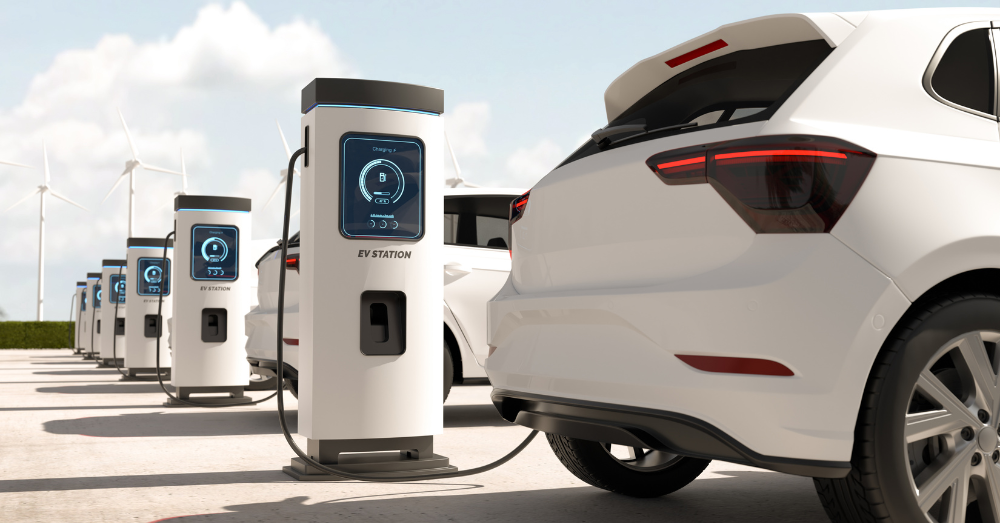
This is a big shift for Hyundai drivers. New and refreshed models like the 2025 IONIQ 5 and 2026 IONIQ 9 ship from the factory with a built-in NACS port, the same plug Tesla uses, so they connect at a Supercharger with no extra gear. Own an earlier IONIQ 5, IONIQ 6, or Kona Electric with the older CCS port? If you bought it on or before January 31, 2025, you can claim a free CCS-to-NACS adapter from Hyundai. Either way, you reach more than 20,000 Tesla Superchargers. That nearly doubles your fast-charging options across the country. Keep in mind that the IONIQ 5 N uses a CCS port, not a native NACS port.
Finding Stations and Paying the Easy Way
Hyundai keeps public charging simple through the MyHyundai app with Bluelink. You can find nearby stations, route straight to them, and plan a longer trip with charging stops built in. The app also lets you start a session and watch it from your phone. Payment works across major networks, so you're not juggling four different accounts to plug in around town or out on I-75.
Hyundai EV Charging by Distance From Home
Below is a quick look at the kind of charging you might use at different distances from your driveway.
| Distance From Home | Typical Charging Type | Best For | Approximate Speed |
|---|---|---|---|
| In your garage | Level 2 home charger | Daily driving and overnight top-ups | Full charge in about 7 hours |
| Around Richmond | Public Level 2 station | Errands, shopping, and work parking | Several hours for a full charge |
| Across the county | 150 kW DC fast charger | Quick boosts during a busy day | 10% to 80% in about 25 minutes |
| Along the I-75 corridor | 350 kW ultra-fast charger | Road trips and longer travel | 10% to 80% in about 18 to 20 minutes |
| Statewide and beyond | Tesla Supercharger network | Travel widely with 20,000+ stalls | Fast charging via native NACS port |
Charging times shift with the charger, the weather, and how full your battery is, so treat these as friendly estimates.
Where the Savings Add Up in Kentucky
Charging at home costs a small fraction of filling a tank, often a few cents per mile at average Kentucky electricity rates. Set charging for off-peak overnight hours, and you save even more. With fewer moving parts under the hood, an electric Hyundai tends to ask less of your wallet over the years. Many models also include Vehicle-to-Load power, which runs small appliances or tools right from the battery. That comes in handy on a campsite or during a storm outage at home.
See Your Hyundai EV Options at Gates Hyundai
Switching to electric should feel exciting, not confusing, and that's the part we enjoy most. When you visit us in Richmond, our team will walk you through every charging choice, show you how the IONIQ 5, IONIQ 6, and Kona Electric fit your commute, and help you map out the chargers closest to home. Want to feel that 800-volt acceleration for yourself? Schedule a test drive, and we'll answer your Hyundai EV charging questions in plain language. You get the same no-pressure approach that drivers across central Kentucky count on. Swing by when you're ready, and we'll help you find the electric Hyundai that fits your life.