Blog / Richmond Hyundai Dealership

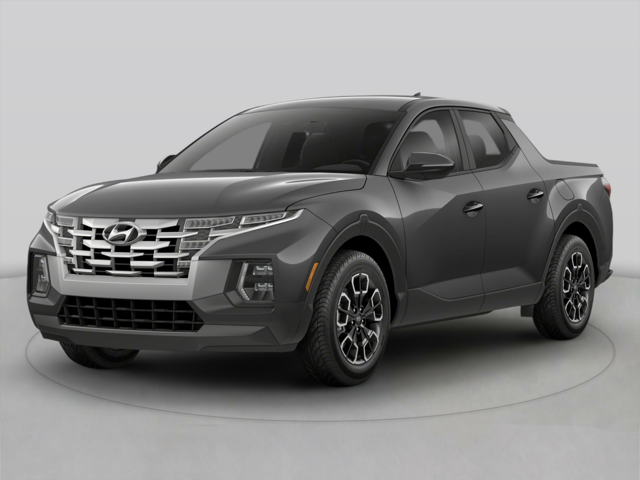
Trim Levels of the 2025 Hyundai SANTA CRUZ: Sport Adventure Vehicle

With a stylish design, a comfortable cabin, and a wealth of desirable convenience and tech features, the 2025 Hyundai SANTA CRUZ is one of the most city-friendly pickup trucks you can drive today. It comes in five trim levels, making it easy to find the right configuration for your needs.

SE

A great starting point for the 2025 SANTA CRUZ lineup, the SE comes with a wealth of standard features, including a capable 2.5L inline-4 engine that produces 191 horsepower and 181 lb-ft of torque. Standard front-wheel drive delivers smooth driving dynamics in all weather conditions and fuel economy ratings of 22 MPG in the city and 30 MPG on highways. Hyundai's HTRAC all-wheel drive is available, optimizing the truck for off-roading.

SEL

With plenty of must-have features at an affordable price, the SEL trim is perfect for drivers who want more luxury without breaking the bank. It comes with the same powertrain as the SE, including standard front-wheel drive for exceptional fuel efficiency.

The interior boasts a wealth of convenience upgrades, including dual-zone automatic climate control with multi-air mode and capacitive touch controls. H-Tex leatherette seating surfaces give the cabin a luxe feel.

SEL Activity

Designed with active families in mind, the SEL Activity builds on the SEL with additional tech and convenience upgrades. A highlight is the power sunroof offered standard on this trim so you can enjoy more of the outdoors throughout your journeys. An integrated tonneau cover protects your cargo from the elements and prying eyes, and roof side rails are standard so you can easily mount a cargo carrier.

This model also pairs the standard 12.3-inch infotainment touchscreen with a 12.3-inch digital cluster into a dual display that becomes a focal point on the dashboard.

XRT

A rugged trim designed for off-road capability, the XRT brings a wealth of performance upgrades. It comes exclusively in HTRAC all-wheel drive and gets power from a turbocharged engine that churns out 281 horsepower and 311 lb-ft of torque.

This model replaces the standard 8-speed automatic transmission with an 8-speed wet dual-clutch with standard paddle shifters. You also get a greater towing capacity of up to 5,000 lbs and trailer pre-wiring for seamless trailering.

Limited

Boasting the same performance as the XRT and a rich suite of standard features, the Limited trim is perfect for drivers seeking a luxury pickup truck. Leather-trimmed seating surfaces, heated and ventilated front seats with power adjustability, and an integrated memory system for the driver's seat and outside mirror positioning are just some of the highlights.

To try your favorite 2025 SANTA CRUZ on the road, visit us at Gates Hyundai in Richmond, KY. 

Posted in:

Related Posts

Hyundai-Kona-vs-Tucson-Small-or-Compact-SUV

Hyundai Kona vs. Tucson: Small or Compact SUV?

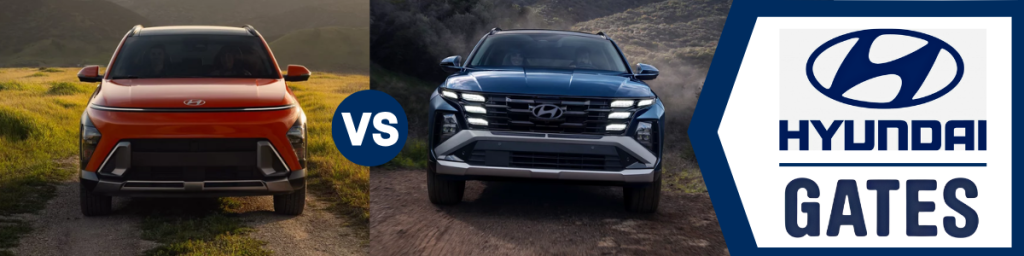
What Changes When You Step Up From Kona to Tucson Two Hyundai SUVs share a showroom floor, a grille family, and the same warranty paperwork. One tucks into a tight downtown spot with inches left over. The other holds a stroller, a cooler, and two duffel bags without anyone folding a seat. The Kona measures 171.3 inches long and holds 25.5 cubic feet behind the rear seats, while the Tucson stretches to 182.7 inches and holds 41.2 cubic feet. Kona shoppers pick between a 147-horsepower 2.0L and a 190-horsepower 1.6L turbo, and every gas Tucson trim runs the same 187-horsepower 2.5L. Front-wheel drive is standard on both models, with HTRAC all-wheel drive available on every trim in either lineup. What Separates a Small SUV From a Compact One Hyundai builds the Kona as a subcompact crossover and the Tucson as a compact, and those labels show up on the tape measure. The Kona rides on a 104.7-inch wheelbase and measures 171.3 inches long. Tucson adds almost a foot of length at 182.7 inches, riding on a 108.5-inch wheelbase. Cargo room follows the same pattern. Behind the rear seats, you get 25.5 cubic feet in a Kona and 41.2 in a Tucson. Drop both rear benches, and those numbers grow to 63.7 and 80.3 cubic feet. Anyone weighing Hyundai Kona vs. Tucson should think about parking, too. Kona swings around inside a 34.8-foot turning circle. Tucson needs 38.6 feet to do the same thing, which you feel in a crowded garage. Two Engines Split the Kona Lineup Kona SE and SEL Sport use a 2.0L four-cylinder rated at 147 horsepower at 6,200 rpm and 132 lb-ft of torque at 4,500 rpm, paired with an Intelligent Variable Transmission. Move up to SEL Premium or Limited, and a 1.6L turbo takes over, producing 190 horsepower at 6,000 rpm and 195 lb-ft between 1,700 and 4,500 rpm, through an eight-speed automatic with paddle shifters. That turbo changes the personality of the car on an on-ramp. Hyundai does not rate any Kona for towing. One Engine Runs Every Gas Tucson Shopping Tucson trims is simpler because the powertrain never changes. All six gas trims run a 2.5L four-cylinder rated at 187 horsepower at 6,100 rpm and 178 lb-ft at 4,000 rpm, backed by an eight-speed automatic with SHIFTRONIC. Your decision comes down to wheels, seats, and screens instead of speed. Tucson also pulls up to 2,750 pounds with trailer brakes, so a small utility trailer or a pair of jet skis stays on the table. Hybrid and plug-in hybrid Tucson models sit in their own lineups with separate pricing and mileage. Hyundai Kona vs. Tucson Trim by Trim Comparison Trim Starting MSRP Engine and Power EPA MPG (FWD) Wheels Added Features 2026 Hyundai Kona (Subcompact SUV) • 171.3 in. long • Cargo 25.5 cu. ft. behind the rear seats, 63.7 cu. ft. with them folded • Not rated for towing Kona SE $25,500 2.0L I4, 147 hp, 132 lb-ft, IVT 29 / 34 / 31 17-inch alloy 12.3-inch touchscreen, wireless Apple CarPlay and Android Auto, Idle Stop & Go, cloth seats, Smart Cruise Control with Stop & Go Kona SEL Sport $26,825 2.0L I4, 147 hp, 132 lb-ft, IVT 28 / 35 / 31 18-inch black finished alloy Heated front seats, wireless device charging, dual automatic temperature control, second-row air vents, leather-wrapped steering wheel Kona SEL Premium $28,425 1.6L turbo I4, 190 hp, 195 lb-ft, 8-speed automatic 26 / 31 / 28 19-inch N Line design alloy H-Tex trimmed seats, 8-way power driver seat, ambient interior lighting, paddle shifters, column-mounted shift-by-wire Kona Limited $32,535 1.6L turbo I4, 190 hp, 195 lb-ft, 8-speed automatic 26 / 31 / 28 19-inch alloy Ventilated front seats, Bose premium audio with 8 speakers, power sunroof, hands-free power tailgate, Surround View Monitor, Blind-Spot View Monitor 2026 Hyundai Tucson, Gas (Compact SUV) • 182.7 in. long • Cargo 41.2 cu. ft. behind the rear seats, 80.3 cu. ft. with them folded, or 38.7 and 74.8 by SAE measurement • Tows 2,750 lbs. with trailer brakes Tucson SE $29,700 2.5L I4, 187 hp, 178 lb-ft, 8-speed automatic 25 / 33 / 28 17-inch alloy 12.3-inch touchscreen, wireless Apple CarPlay and Android Auto, cloth seats, dual-level cargo floor, trailer pre-wiring Tucson SEL $31,050 2.5L I4, 187 hp, 178 lb-ft, 8-speed automatic 25 / 33 / 28 18-inch alloy Heated front seats, 8-way power driver seat with lumbar, hands-free smart liftgate, roof side rails, rear privacy glass Tucson SEL Plus $31,550 2.5L I4, 187 hp, 178 lb-ft, 8-speed automatic 25 / 33 / 28 19-inch alloy H-Tex trimmed seats, with the rest of the SEL equipment list carried over Tucson XRT $33,725 2.5L I4, 187 hp, 178 lb-ft, 8-speed automatic 25 / 33 / 28 18-inch XRT-exclusive alloy Standard tow hitch, Terrain Mode with HTRAC AWD, LED taillights, XRT side cladding, 64-color ambient lighting Tucson SEL Premium $34,050 2.5L I4, 187 hp, 178 lb-ft, 8-speed automatic 25 / 33 / 28 18-inch alloy 12.3-inch digital instrument cluster, onboard navigation, wireless phone charger, power tilt-and-slide sunroof, Highway Driving Assist 1 Tucson Limited $39,675 2.5L I4, 187 hp, 178 lb-ft, 8-speed automatic 25 / 33 / 28 19-inch alloy Leather-trimmed seats, panoramic sunroof, Bose premium audio, 12-inch head-up display, ventilated front and heated rear seats, Surround View Monitor HTRAC all-wheel drive is available on every trim shown. AWD ratings are 27/29/28 for Kona SE, 26/29/27 for Kona SEL Sport, 25/28/26 for both turbo Kona trims, and 24/30/26 for all gas Tucson trims. EPA estimates are for comparison purposes. Starting MSRP excludes freight charges, tax, title, and license fees. Fuel Economy and What Each Choice Costs You Kona SE earns EPA ratings of 29 city, 34 highway, and 31 combined with front-wheel drive, and the SEL Sport shifts that spread to 28/35/31 without Idle Stop & Go. Both turbo trims settle at 26/31/28. Every gas Tucson posts 25/33/28 with front-wheel drive, so a base Kona saves you three combined mpg while a turbo Kona ends up dead even with it. Adding all-wheel drive costs a few mpg on both, and the gap between them shrinks a little more. Matching the Right Size to Your Week Drivers who commute alone, park on the street, and haul groceries rarely run out of room in a Kona. Add car seats, a dog crate, camping gear, or a small trailer, and the Tucson earns its extra length fast. Price muddies things in the middle of both lineups, since a loaded Kona Limited sits close to a Tucson SEL Plus. Decide whether you would rather have ventilated seats and a Bose system in a smaller package or a cargo hold. The Hyundai Tucson rates at 41.2 cubic feet, compared with the Kona's 25.5. Why Buy Your Next Hyundai SUV From Gates Hyundai We stock both models in Richmond, so you can climb from a Kona into a Tucson on the same afternoon and feel the difference yourself. Sitting in each one answers questions no spec sheet can, like whether the Kona's back seat fits your kids or whether the Tucson's cargo floor swallows your golf bag. Our sales team walks through trim differences without steering you toward the biggest window sticker, and our finance staff works with a wide range of credit situations. Bring your trade, drive both, and let your own tape measure settle it.


2026-Hyundai-Palisade-vs-Hyundai-Santa-Fe-Two-Incredible-SUVs-One-Tough-Choice

2026 Hyundai Palisade vs. Hyundai Santa Fe: Two Incredible SUVs. One Tough Choice.

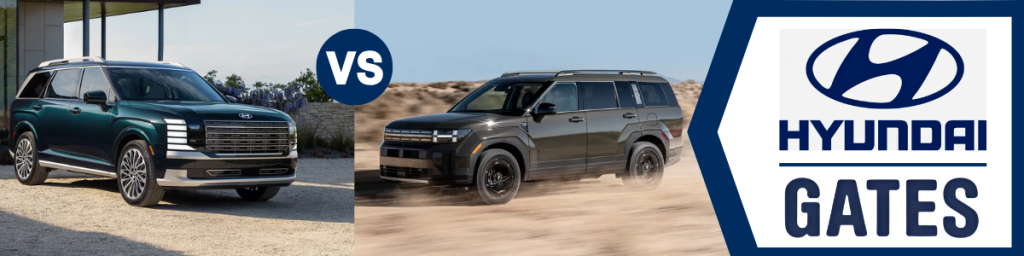
Three Rows, Nine Inches, and One Big Decision Hyundai builds two three-row SUVs that look like siblings on the showroom floor and behave like distant cousins on the road. One stretches nine inches longer and hides a V6 under the hood. The other parks easier and sips fuel like a compact car. Picking one comes down to how often that back row actually gets used. The 2026 Palisade measures 199.2 inches long and starts at $39,435, while the Santa Fe comes in at 190.2 inches and starts at $35,050. Palisade gas trims run a 287-hp 3.5-liter V6, and Santa Fe gas trims use a 277-hp 2.5-liter turbo four. An EPA-estimated 36 mpg combined for the front-drive Santa Fe Hybrid is the best figure in either lineup. Size Is Where These Two Split Apart Both wear a mid-size label, and both give you a third row. Park them side by side, and the gap shows fast. Palisade rides on a 116.9-inch wheelbase and runs 199.2 inches nose to tail. The smaller Santa Fe has a 110.8-inch wheelbase and is 190.2 inches long. Nine inches sounds like nothing until you're stuffing a stroller in behind row three. Cargo numbers follow the same script. The bigger SUV holds 19.1 cubic feet behind the third row, 46.3 cubic feet behind the second row, and 86.7 cubic feet with both back rows folded flat. Its smaller sibling answers with 14.6, 40.5, and 79.6 cubic feet in those same configurations. Third-row legroom leans in the same direction at 32.1 inches versus 30.0 inches. Parking lots go the other way. Santa Fe turns in 37.9 feet curb to curb against 39.2 feet for the Palisade, and that boxy shape makes the back glass easy to place in a tight garage. Two Gas Engines and Two Very Different Hybrids Palisade gas trims run a 3.5-liter V6 rated at 287 horsepower and 260 lb-ft of torque, paired with an eight-speed automatic. Every gas Santa Fe uses a 2.5-liter turbocharged four making 277 horsepower and 311 lb-ft, also through an eight-speed. That's 10 fewer horses but 51 more lb-ft of twist, peaking at 4,000 rpm instead of 5,000. On a loaded on-ramp, that torque shows up as effort you don't have to make. The hybrids flip the pecking order. Palisade Hybrid pairs a 2.5-liter turbo four with two electric motors for 329 combined horsepower and 339 lb-ft, making it the strongest three-row Hyundai sells. A 1.6-liter turbo four and a single motor deliver 231 combined horsepower and 271 lb-ft. of torque. Neither one plugs in. Both recharge while you drive. Fuel Economy and Trailer Math Mileage is the widest gap on the page. Front-drive Santa Fe Hybrid posts EPA-estimated ratings of 37 city, 36 highway, and 36 combined. Add HTRAC all-wheel drive, and it settles at 35/34/34. In front-drive Blue form, Palisade Hybrid reads 33/35/34, and its all-wheel-drive hybrid trims land at 29/30/29. Gas versions tell a quieter story. That turbo four returns 20/29/24 with front-wheel drive and 20/28/23 with AWD. Palisade's V6 manages 19/25/21 in front-drive form and 18/24/20 with AWD. Trail-ready trims drink hardest, at 19/25/21 for Santa Fe XRT and 16/22/19 for Palisade XRT PRO. Trailers reverse the standings. Palisade's V6 pulls up to 5,000 pounds with trailer brakes, and Palisade Hybrid handles 4,000. Gas Santa Fe trims stop at 3,500 pounds, with the AWD-only XRT rated for 4,500. Hybrid Santa Fe tops out at 2,000 pounds, so a pair of jet skis is about the ceiling. 2026 Hyundai Palisade vs. Santa Fe Trim Comparison Trim Level Palisade MSRP Palisade Powertrain / MPG Combined Santa Fe MSRP Santa Fe Powertrain / MPG Combined SE $39,435 3.5L V6, 287 hp / 21 mpg FWD, 20 mpg AWD $35,050 2.5L Turbo, 277 hp / 24 mpg FWD, 23 mpg AWD SEL $41,940 3.5L V6, 287 hp / 21 mpg FWD, 20 mpg AWD $37,590 2.5L Turbo, 277 hp / 24 mpg FWD, 23 mpg AWD SEL Convenience $43,370 3.5L V6, 287 hp / 21 mpg FWD, 20 mpg AWD Not offered Not offered SEL Premium $45,300 3.5L V6, 287 hp / 21 mpg FWD, 20 mpg AWD Not offered Not offered XRT PRO / XRT, AWD only $49,870 3.5L V6, 287 hp / 19 mpg AWD $42,040 2.5L Turbo, 277 hp / 21 mpg AWD Limited $49,770 3.5L V6, 287 hp / 21 mpg FWD, 20 mpg AWD $44,600 2.5L Turbo, 277 hp / 24 mpg FWD, 23 mpg AWD Calligraphy $54,560 3.5L V6, 287 hp / 21 mpg FWD, 20 mpg AWD $47,600 2.5L Turbo, 277 hp / 24 mpg FWD, 23 mpg AWD SE Hybrid Not offered Not offered $36,400 1.6L Turbo Hybrid, 231 hp / 36 mpg FWD, 34 mpg AWD SEL Hybrid $44,160 2.5L Turbo Hybrid, 329 hp / 34 mpg FWD, 29 mpg AWD $38,690 1.6L Turbo Hybrid, 231 hp / 36 mpg FWD, 34 mpg AWD SEL Premium Hybrid $47,520 2.5L Turbo Hybrid, 329 hp / 34 mpg FWD, 29 mpg AWD Not offered Not offered Limited Hybrid $51,990 2.5L Turbo Hybrid, 329 hp / 29 mpg AWD only $45,700 1.6L Turbo Hybrid, 231 hp / 36 mpg FWD, 34 mpg AWD Calligraphy Hybrid $56,780 2.5L Turbo Hybrid, 329 hp / 29 mpg AWD only $48,700 1.6L Turbo Hybrid, 231 hp / 36 mpg FWD, 34 mpg AWD MSRP excludes freight, tax, title, and license fees. EPA estimates are for comparison only, and your actual mileage will vary. The Third Row Usually Settles It The 2026 Hyundai Palisade vs. Santa Fe debate almost always lands on the same question. Who rides in back, and how often? Adults or growing teenagers in row three every week? Palisade's extra legroom, wider body, and 19.1 cubic feet behind the third row earn their keep, and the V6 tow rating is a bonus if there's a boat in your future. Kids back there on weekends, with the seats folded flat most of the time? The Santa Fe does that job for thousands less and gives you better mileage on every commute. A Palisade SE lists $4,385 above a Santa Fe SE, and the spread widens as you climb. Both come with Hyundai's 10-year, 100,000-mile powertrain coverage, and both hybrid systems carry 10-year, 100,000-mile battery protection. Why Buy Your Next Three-Row Hyundai at Gates Hyundai We stock both SUVs in Richmond, and we'd rather you climb into them than read about them. Bring the car seats you already own. Fold the third row. Load the stroller and see which liftgate opening works. Our team will walk you through trim differences at your pace, and we're happy to send you home with one for a day so it can meet your driveway and errands. If you're torn between a hybrid and a V6, we'll pull both up front and let the drive answer it. Schedule a test drive online or swing by the showroom.

Hyundai-EV-Charging-Guide-in-Kentucky

Hyundai EV Charging Guide in Kentucky

How Kentucky Drivers Keep Their Hyundai EVs Charged Thinking about going electric, but stuck on one question: where and how do you actually plug the thing in? You're not alone. Plenty of drivers around Richmond and Lexington love the idea of skipping the gas pump but want to know what daily life with an electric car looks like first. The good news is that keeping a Hyundai EV topped off is easier than most people expect. Home charging covers most daily driving, so that you can leave each morning with a full battery. Hyundai's 800-volt platform adds big range in about the time it takes to grab a coffee. A built-in NACS port and free adapters open up the Tesla Supercharger network for road trips. Whether you want an IONIQ 5, an IONIQ 6, or a Kona Electric, keeping it powered comes down to a few easy options. Let's walk through them. Charging at Home Without Thinking About It For most owners, home charging handles the bulk of what they need. The simplest setup is Level 1, which plugs into a regular 120-volt wall outlet. It adds only a few miles of range each hour, so it works best as a backup rather than your main method. Level 2 is where daily driving gets easy. It runs on a 240-volt connection, the same kind your clothes dryer uses. A Level 2 charger fully charges a long-range IONIQ 5 overnight in about 7 hours. You plug in after work, and the car is ready by morning. Buy or lease a new 2026 IONIQ, and you can choose a ChargePoint Home Flex Level 2 charger or a $400 charging credit through the Hyundai Home program, with installation scheduled for you. Ask our team how to claim it. Fast Charging When You Are on the Move Road trips are where the IONIQ really shows off. The IONIQ 5, IONIQ 6, and IONIQ 9 use an 800-volt platform, which lets them draw power much faster than many rivals. Plug a long-range IONIQ 5 into a 350 kW fast charger, and it climbs from 10 percent to 80 percent in roughly 18 to 20 minutes. That's about as long as it takes to stretch your legs and grab a drink. Even on a more common 150 kW charger, real-world times stay close once the battery is warm. These quick stops fit into breaks you already take. Reaching the Tesla Supercharger Network This is a big shift for Hyundai drivers. New and refreshed models like the 2025 IONIQ 5 and 2026 IONIQ 9 ship from the factory with a built-in NACS port, the same plug Tesla uses, so they connect at a Supercharger with no extra gear. Own an earlier IONIQ 5, IONIQ 6, or Kona Electric with the older CCS port? If you bought it on or before January 31, 2025, you can claim a free CCS-to-NACS adapter from Hyundai. Either way, you reach more than 20,000 Tesla Superchargers. That nearly doubles your fast-charging options across the country. Keep in mind that the IONIQ 5 N uses a CCS port, not a native NACS port. Finding Stations and Paying the Easy Way Hyundai keeps public charging simple through the MyHyundai app with Bluelink. You can find nearby stations, route straight to them, and plan a longer trip with charging stops built in. The app also lets you start a session and watch it from your phone. Payment works across major networks, so you're not juggling four different accounts to plug in around town or out on I-75. Hyundai EV Charging by Distance From Home Below is a quick look at the kind of charging you might use at different distances from your driveway. Distance From Home Typical Charging Type Best For Approximate Speed In your garage Level 2 home charger Daily driving and overnight top-ups Full charge in about 7 hours Around Richmond Public Level 2 station Errands, shopping, and work parking Several hours for a full charge Across the county 150 kW DC fast charger Quick boosts during a busy day 10% to 80% in about 25 minutes Along the I-75 corridor 350 kW ultra-fast charger Road trips and longer travel 10% to 80% in about 18 to 20 minutes Statewide and beyond Tesla Supercharger network Travel widely with 20,000+ stalls Fast charging via native NACS port Charging times shift with the charger, the weather, and how full your battery is, so treat these as friendly estimates. Where the Savings Add Up in Kentucky Charging at home costs a small fraction of filling a tank, often a few cents per mile at average Kentucky electricity rates. Set charging for off-peak overnight hours, and you save even more. With fewer moving parts under the hood, an electric Hyundai tends to ask less of your wallet over the years. Many models also include Vehicle-to-Load power, which runs small appliances or tools right from the battery. That comes in handy on a campsite or during a storm outage at home. See Your Hyundai EV Options at Gates Hyundai Switching to electric should feel exciting, not confusing, and that's the part we enjoy most. When you visit us in Richmond, our team will walk you through every charging choice, show you how the IONIQ 5, IONIQ 6, and Kona Electric fit your commute, and help you map out the chargers closest to home. Want to feel that 800-volt acceleration for yourself? Schedule a test drive, and we'll answer your Hyundai EV charging questions in plain language. You get the same no-pressure approach that drivers across central Kentucky count on. Swing by when you're ready, and we'll help you find the electric Hyundai that fits your life.